CIMA’s latest pass rates for case studies have just been updated to include August 2025 and are currently available on its website.
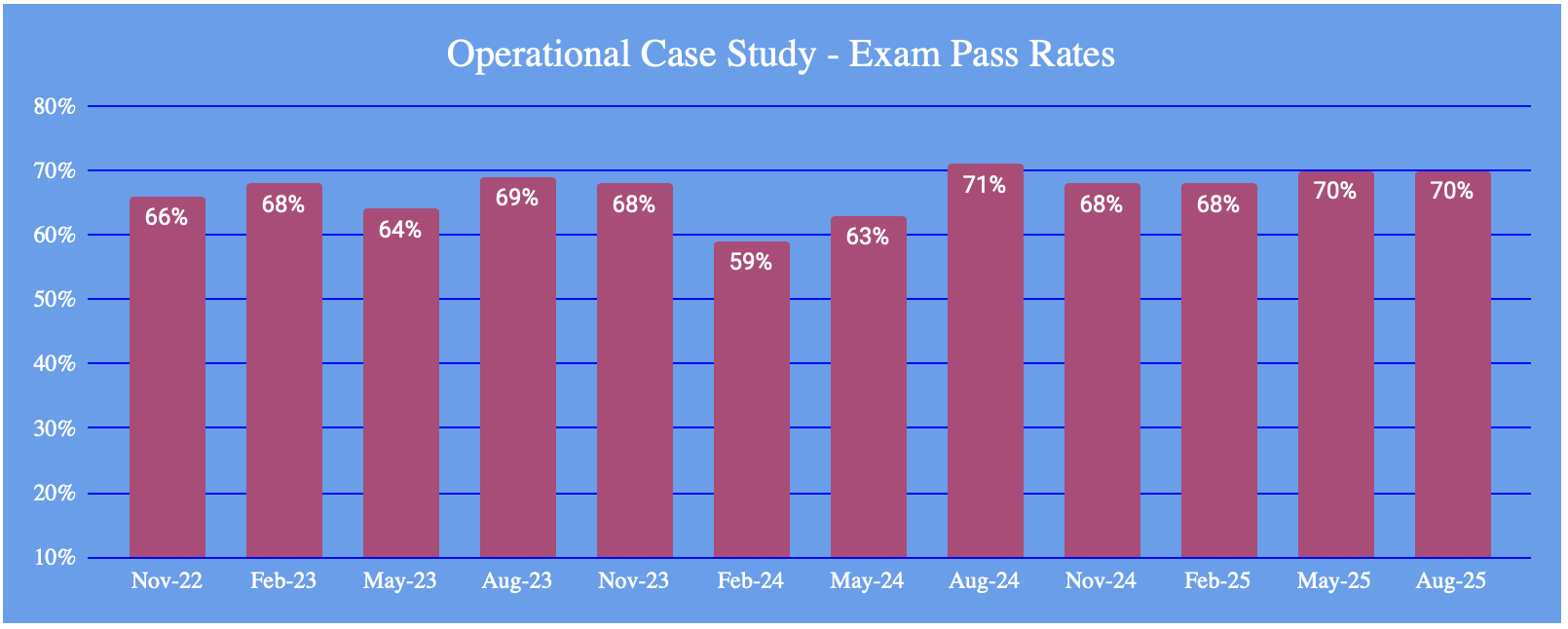
Operational level continues on a good run, staying consistent at 70% from May to August 2025. This is a good pass rate, continuing to give the impression that OCS students are preparing and handling the case study exams well.
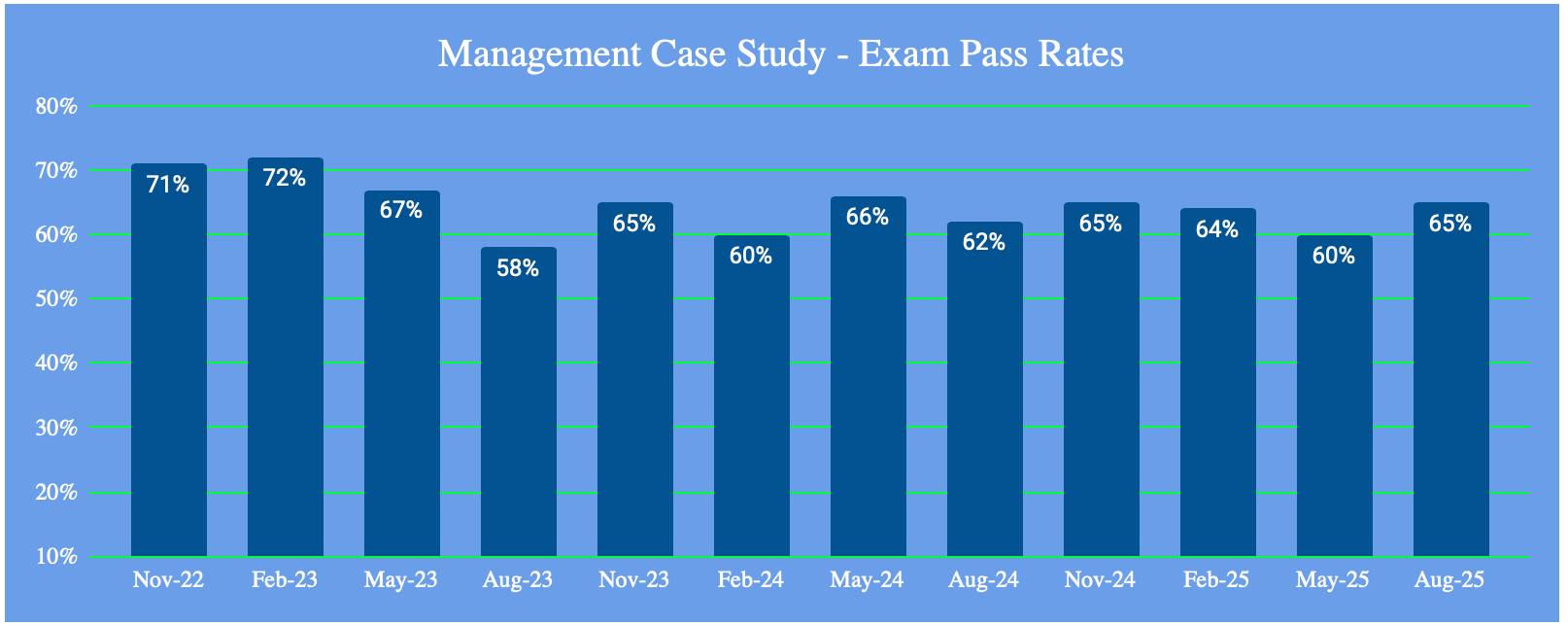
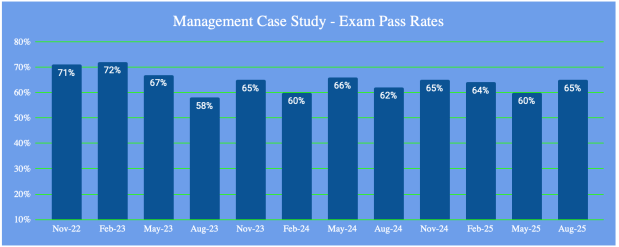
Management level also remains in the 60% range, but performs noticeably better in August 2025, rising from 60% in May to 65% in August. This uplift may reflect the longer period MCS students have to work with the pre-seen material, as the same material is used for both sittings. This does not diminish the effort involved since 60% is still a strong pass rate.
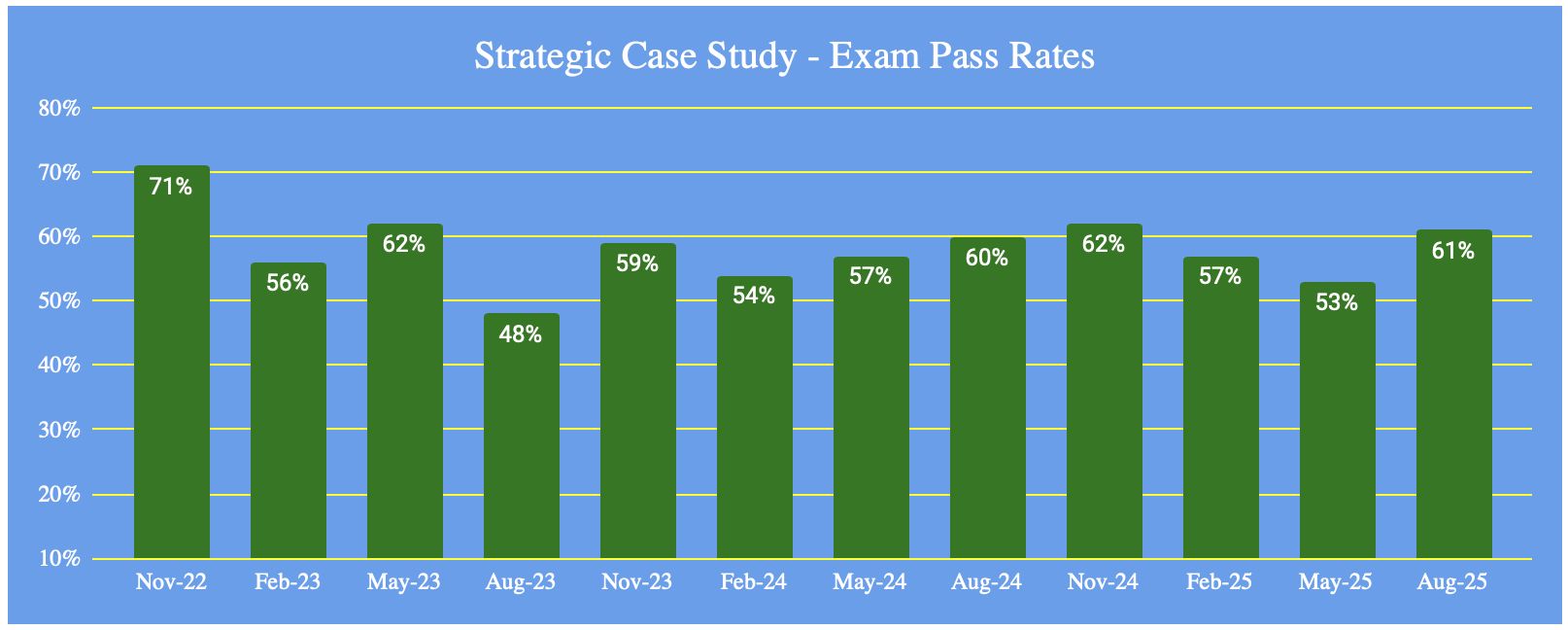
Similarly, the Strategic level shows a notable improvement, climbing from 53% in May to 61% in August. This uplift may also be linked to the extended familiarity with the pre-seen material, like with the MCS. The stronger August result suggests that this additional preparation window can make a meaningful difference, while still recognising the significant effort required to perform well at this level.
There are no new pass rates for the Objective Test (OT) as CIMA will only be reporting on these rates on a yearly basis.
Despite the good performance shown in the pass rates, students must not become complacent about studying. Good results do not mean that the exams are any easier. I’d like to think that it’s more about students focusing and dedicating more towards their studies, thereby earning good marks for their exams.
If you require assistance, visit the Resources page for some helpful links to materials and preparation tips.
For a graphic view of this, here’s our CIMA Exam Pass Rates page.
For Case Studies
Operational
Management
Strategic
68%
65%
62%
68%
64%
57%
70%
60%
53%
70%
65%
61%
For Objective Tests
The results are total exams taken from 1 November 2023 to 30 November 2024.
83%
53%
78%
81%
44%
47%
76%
63%
58%
For Certificate Level
These results are total exams taken from 1 November 2023 to 30 November 2024.
72%
53%
73%
57%


 MJ THE TUTOR